
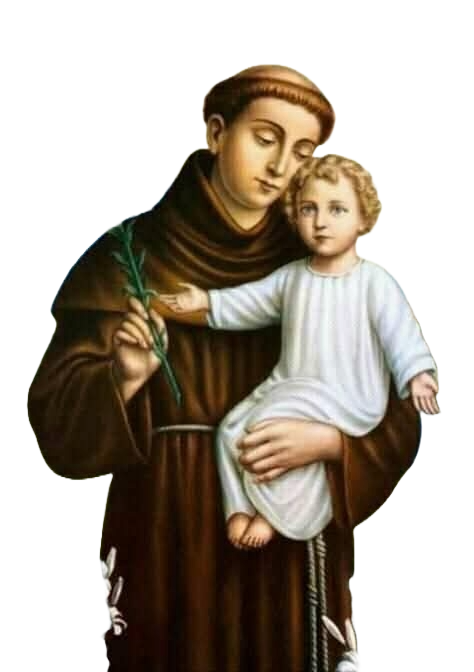
Tau, the Franciscan symbol
The last letter of the Hebrew alphabet.
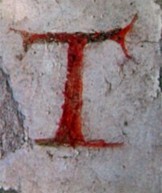 The Tau has strong symbolic significance in the Old Testament. Indeed, in the Bible (Ezekiel 9:4), the Lord says to the prophet Ezekiel: “Go through the city, through the midst of Jerusalem, and put a mark, a tau, on the foreheads of the men who sigh and groan. ” Thus, through this sign, the poor are saved from extermination. Similarly, the Book of Revelation speaks of a mark on the forehead: “Do not harm the earth, the sea, or the trees, until we have sealed the foreheads of the servants of our God” (Rev 7:3). The tau is thus a sign of belonging to God and of redemption. We received this inner sign of Christian renewal on the day of our baptism. Since then, we have been spiritually marked! (cf. Eph 1:13).
The tau was adopted by Christians very quickly. It is found in the catacombs in Rome for two reasons: first, it is the last letter of the Hebrew alphabet.
Saint Francis and the Tau.
It is for all these reasons that Saint Francis adopted and used this sign. Love of the cross indeed accompanied his entire conversion until his death. For our saint, the Tau was the concrete sign of salvation, a sign of hope! Saint Bonaventure thus states that the Tau sign had all the veneration and devotion of Saint Francis: he often spoke of it to recommend it, and wrote it in his own hand at the bottom of the letters he sent (Legenda Major 4,9). In the Treatise on Miracles 159, we are even told that he had a small staff shaped like a tau and that he signed his actions with the tau. Brother Pacificus, one of Saint Francis’ companions and minister of the friars in France, had seen on Saint Francis’ forehead a tau full of color and life.
The tau, therefore, is steeped in biblical, Christian, and Franciscan tradition. It does not belong exclusively to the Franciscans, but they use it most often as a sign of their faith. However, the tau is not magical. It is not a talisman. The tau is a sign of Christian faith and hope. Wearing the tau means committing to the spiritual path of baptism to live according to the Gospel.
Today.
Wearing a tau means acknowledging that we are saved. As the prophet Ezekiel says, through this sign we have powerful protection (cf. Ezekiel 9:4). This is good news! It is a sign of dignity and belonging to God. A believer knows that they are of God and that they are journeying toward God, but this sign also tells others. In fact, it is a testimony.
The connection between the cross and the tau tells us that the cross is no longer a sign of torture and shame, nor is it a political sign, but that the cross is the sign of the saved—of those who know and believe that Jesus saves us from our evils, our sufferings, and our limitations. He is there for us! We are precious to him; he loves us.
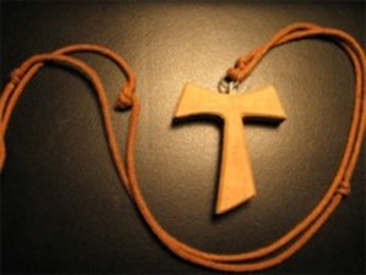 The tau is usually made of wood—a flexible and natural material. Like wood, the baptized person must allow themselves to be shaped by the Word of God and the sacraments. They must be flexible to be molded by God and regain His image. Often the tau is made of olive wood, a sign of peace. Saint Francis blessed nature and people; through his blessing, he “spoke of the good,” according to the Latin etymology of the word… a noble mission in our world!
 Become a Friar