
Dear Brothers, may the Lord grant you His peace.
From July 30, 2025, to July 30, 2026, the Province of St. Anthony of Padua in the Democratic Republic of the Congo will have been in existence for exactly one year, to the day, following its canonical establishment by Brother Massimo Fusarelli, Minister General, in Lubumbashi at the residence of the Discalced Carmelite Fathers. A year of existence is a reason to give thanks to God, who never ceases to renew His love for us. Everything begins with one, and one is in everything. It is time to take stock. This review involves looking at what has been accomplished during these 365 days of existence, what has not been done but should be done, and what absolutely must be done. In fact, it is time for each brother, each fraternity, and the provincial government to reflect. What have I done for my province, for my brothers? During this first year of my province’s existence, have I benefited from God’s grace and mercy? Or have I simply squandered them?
This day, the first anniversary of our province, is also a time to look back on the process, the journey that led to the founding of the “Saint Anthony of Padua” Province. It is our duty to reflect on our history. It is helpful to know where we come from and where we are, even if we do not know exactly where we are going. But in faith, there is reason to hope for a better future despite the difficulties of the present.
This first anniversary of our Entity is also an opportunity to renew our call for greater solidarity and greater commitment to fraternal, economic, and relational cohesion. Questions such as: What is my role in building my province? Who are the brothers to me? Who am I to them? must arise from each person’s conscience. No one can opt out of this discussion; no one should look to others—each brother must ask himself these questions with complete honesty and sincerity.
The building of the province rests squarely in my hands and not just in the hands of others. If we want to be helped, we must begin by helping ourselves. Those who have already understood this continue what they have begun; for those who have not yet begun, now is the time to understand their commitment. This commitment needs no reminder; it is an imperative already ingrained within us. May it be, above all, a commitment of love and kindness toward our province.
In the following paragraphs, you will discover the various stages that led up to the founding of the “Saint Anthony of Padua” province. The ceremonies marking the canonical establishment of this province did not come out of nowhere; we would like to highlight the historical process that led to the event whose anniversary we are celebrating today. Here are some key moments we experienced together, still fresh in our memories.
a. Physical Restructuring
The year 1985 can be considered the first restructuring of the Franciscan presence in the Democratic Republic of the Congo (DRC), then known as Zaire. Indeed, in 1985, the General Curia, as part of
it dubbed “Project Africa,” asked all missionaries of various nationalities present in Zaire to come together into a single entity known as the “Vice-Province of Saint Benedict the African.” Prior to this reorganization, each group of missionaries reported to its province of origin. The establishment of this entity took place in the chapel of St. John XXIII College in Kolwezi. Since then, all the friars in Zaire have lived together as a family, each calling the others “Friars Minor.”
In 1999, the second restructuring took place. The bond of brotherhood was further strengthened by the transition from the Vice-Province to the Province of Saint Benedict the African. This represents significant progress. This progress is the result of the gradual maturation of an irreversible momentum that is already underway. Today we are proud of our elders, who never ceased to dream big and envision Saint Benedict becoming a large family with many members.
Saint Benedict is the work of everyone, without exception. This is evident in formation, pastoral ministry, the maintenance of existing structures, and the creation of new ones: all of this is called development. No one can claim that everything we see is the work of a single brother. No! All the brothers, working together like a colony of bees or ants, have rolled up their sleeves and joined hands to give Saint Benedict the beautiful image we have admired, and we want it to remain intact. We do not forget our benefactors who have lent us a helping hand and continue to support us. Through these few lines, we extend our heartfelt and sincere thanks to them. Let us highlight the key moments we mentioned at the beginning of this paragraph.
- Formation
The Order has always placed great emphasis on formation, and rightly so. It is an indispensable step for our spiritual and physical survival in our religious life—and even for the life to come. It is the umbilical cord that binds us all together without chaining us down. From our postulancy to the St. John XXIII Scholasticate in Kolwezi—the “motherhouse” where each of us was born—we were immersed in a process of intellectual, human, moral, and spiritual growth... We are indebted in more ways than one to our past and present formators for the various skills that shape our behavior—from a not-too-distant past, a present filled with memories of the past that is not yet gone, and a present ever-present in our minds—a present rich with projects that guide us and shape our future. The future is being shaped now, not tomorrow. For perceptive and effective brothers, this future is already firmly planted in their hearts.
With the help of our brothers, inspired and enriched by the penetrating message of our Seraphic Father, we are confident in our ability to meet specific needs that are no longer personal but fraternal. Marked by a shared identity in which both long-standing and new brothers engage in a relationship without hierarchy, we learn from one another that what we do can always be improved, because human work is never perfectly complete. Let us be like children who learn from adults and who, in an informal way, are teachers to adults. Yes, we have much to learn from children!
We cannot say it often enough: we are part of a synergy between trainees and trainers, between training and being trained. We are in a process of limitless learning. The limit of our learning is death, but not everything ends with death. Thus, our learning
becomes a constant process of refinement for greater effectiveness. It will not be out of place to frequently hear terms like “lifelong learning” and “training of trainers”... Just as in a professional context where “training is increasingly seen as a way to improve and recognize employees’ skills and performance, as well as to help them adapt to technological changes.” Let us not be surprised to find ourselves in much the same cycle with regard to our formation, taking into account the realities we face, in order to spread the spirit of Franciscanism in our country and throughout the world.
- Pastoral Ministry
Pastoral ministry, like formation, is an area that requires collaboration. Pastoral ministry is the field where all ministers work—where those with more experience already have a certain level of mastery, and newcomers are called to put into practice the pastoral principles they’ve learned in school. Here, too, both veterans and newcomers are called to deepen their knowledge in this area. Newcomers should not be ashamed to learn, while veterans, for their part, should be enthusiastic about connecting newcomers to the guidance they received from their predecessors.
Formation and pastoral ministry are a shared endeavor. Pastoral ministry is therefore not the exclusive domain of a select few, but of everyone. Like formation, pastoral ministry reminds us that there are also new skills that must adapt to a rapidly changing environment. Everyone’s effectiveness depends on the commitment of all to a common cause. More than anything else, these two aspects strengthen our bonds of brotherhood and further solidify our sense of belonging to the great family founded by our Father Saint Francis of Assisi. With pride, but without arrogance, we acknowledge that we have accomplished much together, and we will accomplish much more together, hand in hand.
- Maintenance of Facilities
Regarding the maintenance of existing structures, every brother, wherever he may be within his fraternity, faces the daily challenge of ensuring the sustainability of his living environment and promoting good, robust health. Indeed, when we care for our environment, we care for ourselves, for there is no environment without people (cf. Bishop Fulgence MUTEBA, Archbishop of Lubumbashi, D.R. Congo). When we neglect it, we put ourselves at risk of poor health. Maintaining our structures means ensuring a long and better life for them—and for us. Many of us have understood this, and what we are saying now serves as a reminder for others. The more we remind ourselves of these things, the more deeply they are engraved in our hearts, and the more sensitive we become. Our living environment must reflect who we are and radiate that around us. Does our very presence not challenge those around us? And doesn’t our community challenge us in return? If so, do we constantly challenge one another so that our mutual challenge remains a flame that never flickers, one that prompts us to question one another—starting with ourselves? This is everyone’s responsibility.
- Creating New Structures
On this subject, almost everyone is on board, but not everyone has the same talent. “To each according to his abilities,” as the parable of the talents tells us (Mt 25:14–30; Lk 19:11–25). But no one wants to sit idly by. Taking action is a good thing. But am I up to the task? In this area, many have slipped up and made mistakes. Some have
carried out works that do not reflect well on our brothers; others have done nothing. We are indebted to the efforts of our benefactors and called to improve our reputation.
It would be ungrateful not to acknowledge that others have dared to take action; the Lord has blessed them, and they have proven effective. In this synergy of initiatives, here and there, we have seen new structures and new yet coordinated works emerge. The new structures, added to the old ones, strengthen our shared work. Whether in the new or old structures, everyone’s contribution is visible, and all are present in these works where initiative engages and mobilizes us. No one is excluded, and no one holds a dominant position. As children of the same Father, we grow together in a spirit of brotherhood and belonging. No one has the right to exclude another, and no one has the right to feel excluded or to exclude themselves. We must keep in mind the true sense of belonging, as we profess in our solemn vows: “I give myself wholeheartedly to this fraternity.”
b. The Process of Requesting an Autonomous Entity in the East of the DRC: A Historical Perspective
- On October 4, 2001, certain (anonymous) brothers from the East addressed the Minister General directly, Brother Jacomo Bini, and requested an autonomous entity, with a copy sent for information to the Definitory of Saint Benedict the African, based in Lubumbashi. No favorable response was received.
- In 2006, the Provincial Chapter of St. Benedict, meeting in Kiswishi from August 3 to 13, 2006, opted for the gradual restructuring of the Province of St. Benedict into various entities.
- In 2009, the Provincial Chapter of Saint Benedict, held in Kigoma from August 2 to 11, 2009—a chapter devoted exclusively to restructuring—resolved to create three entities (Katanga, Kasai, and Kivu). The Minister General, Br. José Rodriguez Carballo, to whom the request was addressed, accepted it and decided to proceed with a gradual restructuring as part of a process of growth and maturation. He decided to establish the Kasai Entity as the first step in 2014. The Province of Saint Mary of the Angels was canonically established on February 16, 2015.
- In 2019, the brothers from eastern DRC renewed their request to the Provincial Definitory of St. Benedict to present this matter to the provincial chapter so that the latter could forward it to the Minister General, Brother Michael Perry, and his Definitory. At the Kolwezi Chapter, held in August of that same year (2019), the brothers asked the Province of Saint Benedict the African to proceed with the second stage of the restructuring.
- On August 23, 2022, Brother André Murhabale, then Provincial Minister of St. Benedict, sent a letter to the Minister General, Brother Massimo Fusarelli, in which he reiterated the request for an autonomous entity in the eastern part of the Democratic Republic of the Congo.
- In response to this request, the Minister General (Brother Massimo Fusarelli) and his Definitory appointed Brother Nicodème Kolani as Visitor and Facilitator for the Province of St. Benedict the African during this restructuring process. He wholeheartedly agreed to render this service to the Order and to the province.
- After arduous work, marked by much sacrifice and fatigue, joy and sadness, and carried out in a spirit of courage, faith, and hope, on December 15, 2024, Brother Nicodemus Kolani requested that the Minister General establish an autonomous entity in the eastern part of the DRC, a move that the majority of the brothers strongly desired.
- At the request of the Visitor General, the Minister General gave his approval for the establishment of a new entity to be named “Province of Saint Anthony of Padua” in the Democratic Republic of the Congo.
- Without delay, the Visitor General, Brother Nicodème Kolani, officially convened the Founding Assembly to be held from March 4 to 7, 2025, at the Pallottine Training Center, Kyeshero neighborhood, Goma, 18 Avenue du Lac, Goma municipality, North Kivu Province. Unfortunately, following the tragic events of the M23 rebellion—supported by Rwanda—the city of Goma was overrun. The plenary Assembly’s proceedings were postponed to late July and early August 2025. And so it was done!
- On June 20, 2025, from Abidjan, the Visitor General announced a new convocation of the Assembly for the new Entity in the East of the DRC; which was to be held from July 30 to August 2 in Lubumbashi at the Carmelite Fathers’ premises. This was not only a cause for joy but also for hope, and even more so a sign of Franciscan maturity in the DRC. The Province of St. Benedict the African, in the throes of childbirth, is about to give birth to a new province—a work of the grace and mercy of the Most High. On July 30, 2025, the new entity was solemnly proclaimed in Lubumbashi by Minister General Massimo Fussarelli.
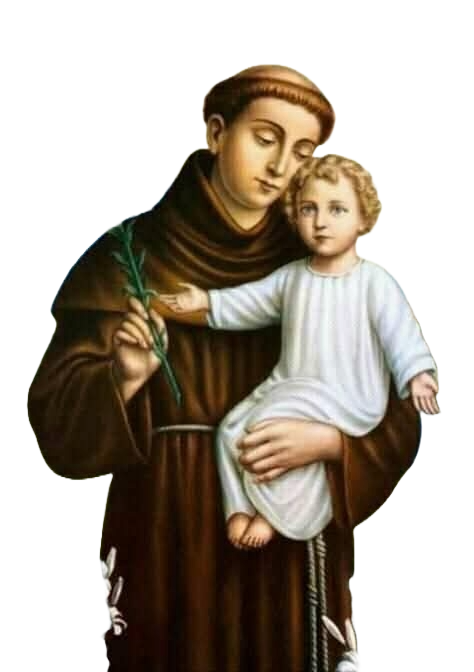
My dearest Brothers, I convey to you the blessing of our Seraphic Father, Saint Francis of Assisi, and wish you a happy anniversary for our young Province; may the Lord, through the intercession of Saint Anthony of Padua, bless you both inwardly and outwardly. Amen.
Given at Goma, at the Provincial Curia, on July 29, 2026
 Become a Friar