
Prot. 126/OFMPROVSANTRDC/2026
“THE WORD IS ALIVE WHEN ACTIONS SPEAK”
Beloved brothers and sisters, Peace and Blessings!
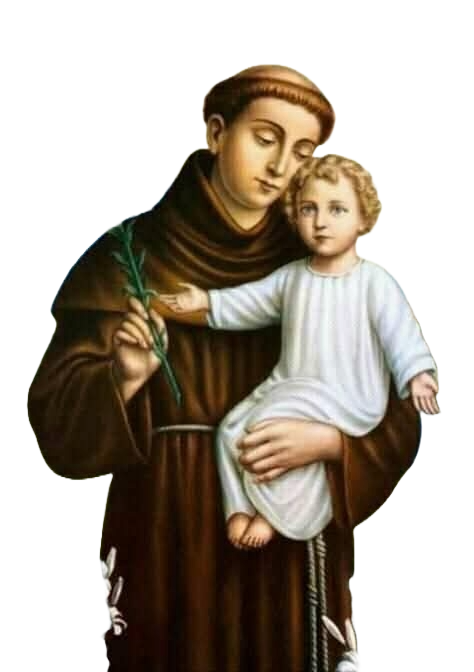
On this day, June 13, 2026, the entire Church and the Franciscan family joyfully celebrate Saint Anthony of Padua. This is not a birthday celebration for our province, but a patronal feast. Saint Anthony, whom we honor today, is one of the brothers who left an indelible mark on the history of the Church and the Order through their witness to the love of the Gospel and their closeness to the least of these.
Born in Portugal, he first joined the Canons Regular of St. Augustine and then the Franciscans, where he burned with a desire for martyrdom. A brilliant preacher and Doctor of the Church, Anthony chose the path of poverty with complete simplicity and humility, imitating Christ in the footsteps of Saint Francis of Assisi. He understood that only the humble and simple Christ is enough. His life continues to shine and challenge us to this day. From his life, he leaves us—his brothers and sisters, disciples of Saint Francis—several legacies for our lives in this world that tends to live without God. We will limit ourselves to just a few:
- First legacy: the passion to seek God
His primary concern was the search for God. He quickly understood that God is the source of everything. Whoever has God has everything; whoever does not have Him lacks everything, even if he is abundantly filled with material goods. His entire life was directed toward God, and God showered him with many gifts—even those we least expect. We call upon him to help us find lost objects. Who would ever think of that? Who would imagine that to find what we’ve lost, we need to call upon a person? But his true mission is to help us find God again when we think we’ve lost Him, even though He is right beside us, within us. Saint Paul elegantly emphasizes this: “Do you not know that you are the temple of the Holy Spirit?” (1 Cor 3:16). We are the living temple of God. We are the dwelling place of the Most High. What an honor! What a joy!
And this temple is our heart! Though our heart may stray from Him, it remains His dwelling place, where He lives in silence and invites us into silence to discover His presence within us. And where we think He is absent, He is there: in our weariness, our anxieties, our worries, our never-ending struggles of every kind, our discouragement… He is there, seeking our cooperation for inner peace and social peace. He can do anything, but He needs our help, our cooperation, our determination, and our sacrifice for our complete well-being. Saint Augustine says: “God can do anything, but He cannot save us without us” (cf. *The Confessions*).
For this reason, we must seek Him, because, as the psalmist says, He allows Himself to be found. And once we have found Him, let us continue to seek Him, as Saint Augustine reminds us. Thus, seeking God has a beginning but no end: it is a constant search. Whoever seeks God finds Him, and whoever finds Him does not keep Him to himself. He makes Him known to others, just as Saint Anthony of Padua did, whom we joyfully celebrate today. Let us not, then, allow our hearts to harden. Let us call upon Saint Anthony, not only for lost objects but also—and above all—for all our worries and concerns...
- Second Legacy: The Power of the Word Lived Out
Brothers and sisters, Saint Anthony of Padua preached aloud so that all might hear him. There was a harmony between what he lived and what he proclaimed aloud. His entire life was a message delivered to the Church. Before being eloquent, he was credible in the eyes of both people and God. Our world does not need fine speeches. It needs witnesses, as Pope Paul VI said. May our lives become our first sermon, may they be a living witness that never compromises itself. Our actions speak louder than our words. Fine words without good deeds are like a sermon in the desert. “Let our words be silent and let our actions speak,” Saint Anthony of Padua teaches us.
If we take a look deep within ourselves, we realize that we are far from this message of Saint Anthony. Let’s examine this in a few ways:
- First aspect: work
What we are, we owe to others, not to ourselves. The Order has made us what we were not. For this reason, we are called to be grateful and to overflow with gratitude, especially when it comes to our work. And as we know, work is a commandment from the Lord. God was the first to set an example. According to the Book of Genesis, He worked for six days and rested on the seventh. He did not keep the fruits of his labor for himself; he gave everything to humankind. It seems as though he moved from self-centeredness to self-forgetfulness. Do we ever imitate God? Do we forget ourselves for the sake of others?
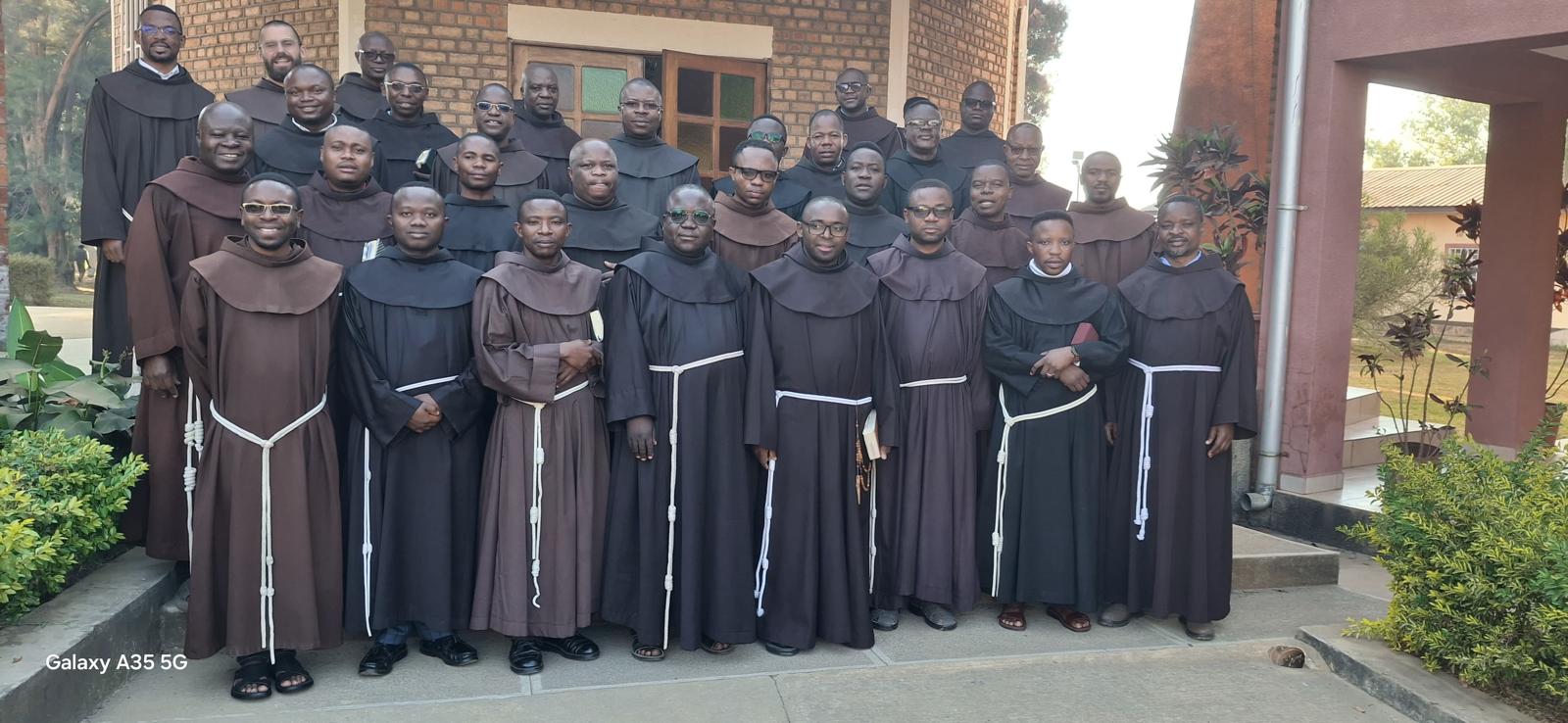
Here I invite each brother to look at himself and not at others. Some brothers, drawing on the words of their religious profession—“I give myself wholeheartedly to this fraternity”—have come to understand that they are everything to everyone in their work. They give the fruits of their labor to the province to ensure its survival. Their gesture is one of self-forgetfulness and honesty. Through their actions, they are a “gift” to the province. They strive to embody the initiative of the first Christian community in sharing their goods. We encourage them not to forget this essential aspect of our Franciscan and religious life.
On the other hand, there are brothers who work but give nothing to the fraternity. They eat, sleep, and do everything at the fraternity’s expense, yet offer nothing in return. They are insensitive to the fraternity’s affection and tenderness. They are like people with disabilities whom we must care for in every way, and yet they are not. There are even people with disabilities who are useful to themselves and to the community. These brothers refuse to be a burden on the community, even though it is the community’s duty to care for them. These are people with disabilities who are useful to society. These brothers who work yet give nothing to the community are like people who do not work, because we see no fruit of their labor. As St. Paul says: “If anyone will not work, neither shall he eat” (2 Thess. 3:10). This kind of brother, who has received everything from the fraternity and gives nothing in return, has forgotten the sense of gratitude and honesty.
We remind them that they, too, are brothers of the community. In their religious profession, they promised to give themselves wholeheartedly to their community. We urge them to consider matters from a different perspective and realize that they, too, are indebted to the fraternity. The sharing of resources initiated by the province concerns everyone and involves everyone. Saint Anthony kept nothing for himself; he gave everything to the fraternity.
-Second aspect: prayer
Let us be green trees, not dry ones. Prayer is not an optional part of our lives. It is mandatory. This obligation is not imposed on us from the outside but from within. I impose it on myself, you impose it on yourself, we impose it on ourselves. In fact, it is not us but the One who is within us. And the One who is within us is our Master. It is He who speaks to us from within. It is He who invites us into an intimate dialogue in which His heart speaks to our hearts.
Dear brothers and sisters, prayer is life for us, disciples of Jesus Christ. It lifts us up to the higher reality that transforms us. It makes us like a tree planted by a stream, bearing good fruit in every season (cf. Ps 1:3; Jer 17:8). Let us visit our oratories, our chapels, and our churches regularly. Let us spend time there and make our holy places our daily meeting places. We give thanks to God for our brothers and sisters who, through their regular presence in our holy spaces, remind us of one of our sacred duties as men and women religious: prayer.
-Third aspect: our commitment
Here we wish to speak of our committees. We have willingly agreed to serve our province from where we are and with what we have been entrusted to do for the community. Thank you for accepting the task entrusted to you. But it is not enough simply to accept. We must put it into action. Many of our committees are not functioning properly because some leaders have said yes but are struggling to demonstrate practical initiative. May Saint Anthony help us all to move from the word we have received to action.
- Third Legacy: Compassion for the Poor
We are all poor, but there are those who are poorer than we are. Let us have the same perspective that Saint Anthony had toward the poor. Saint Anthony saw Christ in the faces of the hungry, the sick, and the outcasts; today, our brothers and sisters are being ravaged by war and the Ebola virus. In Padua, he founded a charity for the poorest of the poor. Even today, he challenges us: where are our own “Paduas”? Who are the poor whom God places in our path wherever we are?
Brothers and sisters, on this patronal feast day, let us turn to Saint Anthony; let us seek his intercession for our communities, our province, and for our country, which is suffering. May he obtain for us a simple and humble heart, truthful words, and open hands. May Saint Francis of Assisi and Saint Anthony of Padua obtain for us the grace of unity and communion. Let us keep one another in our prayers today and every day of our lives.
Happy patronal feast day to each and every one of us! May Franciscan joy fill our hearts and our homes.
Peace and Good! Fraternally.
Given at Goma, Provincial Curia, June 11, 2026
Fr. Jean-Baptiste TABARO MURHEGA, OFM
Provincial Minister
 Become a Friar